
Red-Eared Slider
Trachemys scripta elegans
Red-eared slider: complete species guide (video in Chinese)
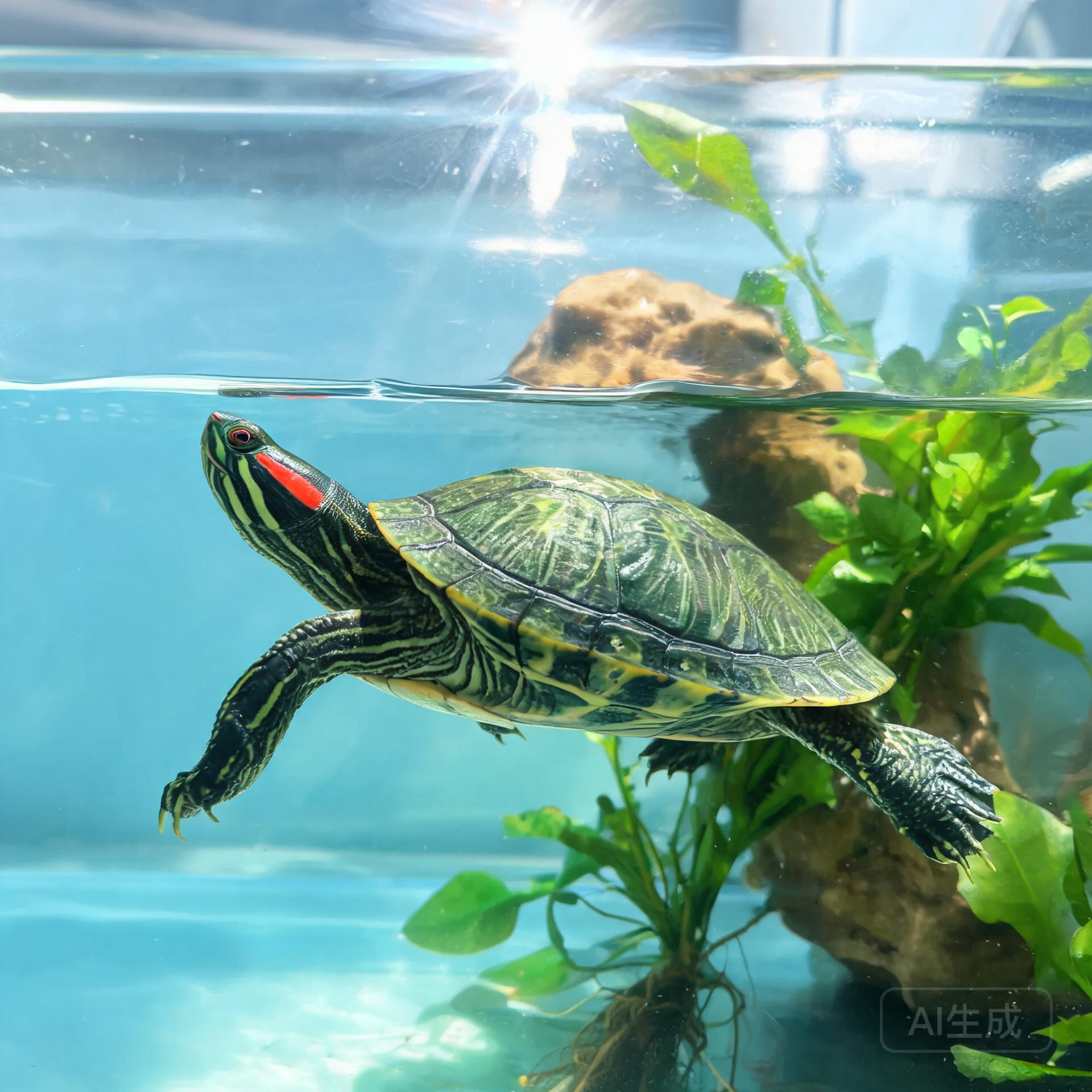
Basic info
🌟 Why keep a Red-Eared Slider?
Newcomer's first choice
Sliders adapt extremely well and are lenient about water quality and temperature, making them the easiest species for a beginner to start with.
Highly interactive
Lively and active, they chase your hand and beg for food, so there is plenty of interaction and real enjoyment in keeping them.
Easy on the wallet
Hatchlings are inexpensive, commonly CNY 10-50, which makes them outstanding value.
Hardy
Strong natural resistance and quick recovery from illness mean they are not easily lost.
Moderate size
Adults reach 20-30 cm, a good size for a home without being hard to house.
Good looks
The red ear mark is bold and the shell pattern is clear, so they are rewarding to look at.
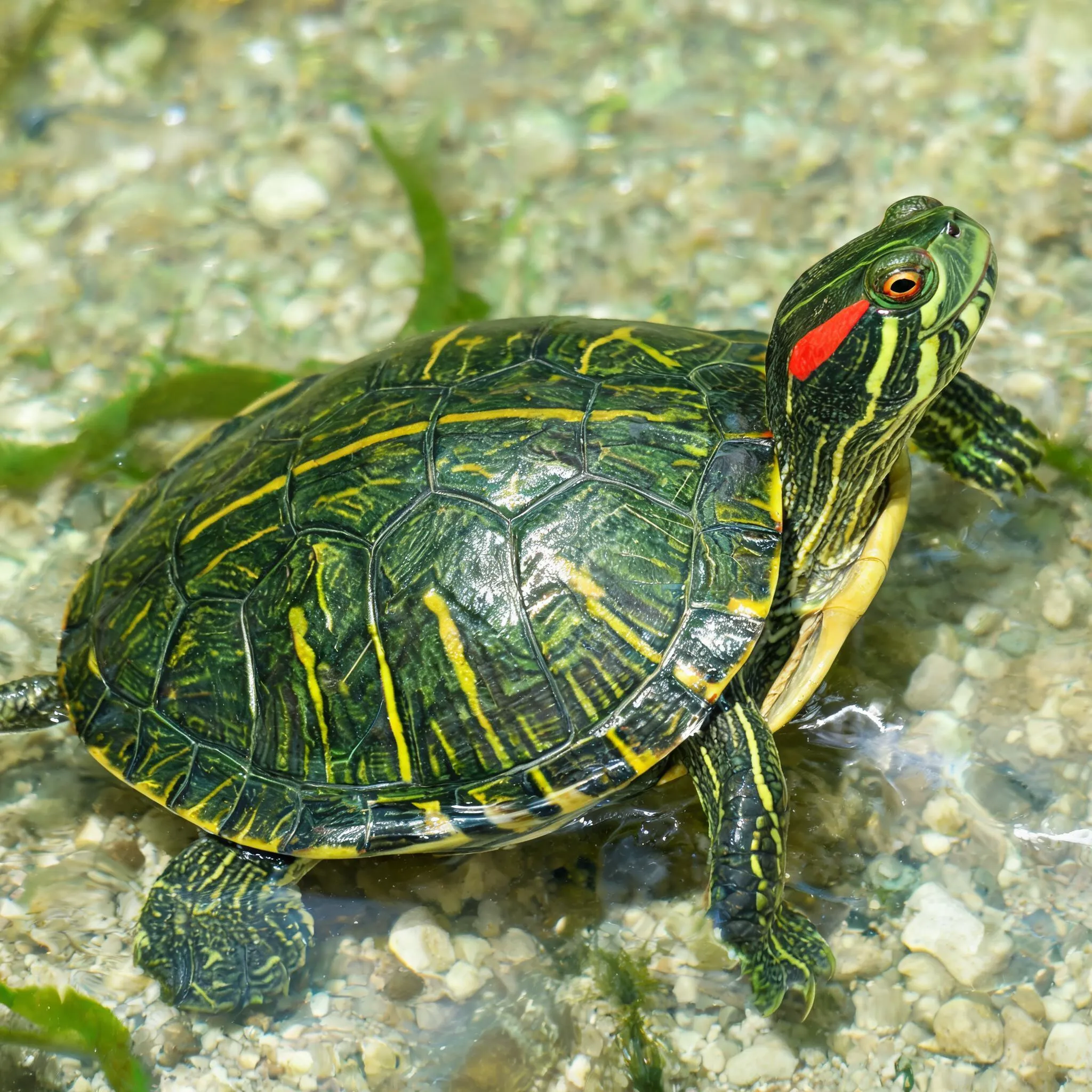
Housing
Common problems
White eye disease
Cause: Poor water quality, bacterial infection, vitamin A deficiency
Solution: Apply erythromycin eye ointment to the affected eye twice a day; dry-dock for 4 hours then return to water; raise the water to 28°C to support treatment; supplement vitamin A; continue for 7-14 days; injectable antibiotics may be needed in severe cases.
Shell rot
Cause: Poor water quality, infected injury
Solution: Remove the rotting tissue, disinfect with povidone-iodine, keep the turtle mainly dry (1 hour in water a day to stay hydrated), apply an antibiotic ointment, and treat for 2-3 weeks.
Soft shell
Cause: Insufficient UVB light, calcium deficiency
Solution: Add a UVB basking lamp (8-10 hours a day), add calcium powder or cuttlebone to the food, and allow direct sun (2-3 times a week).
Refusing food
Cause: Temperature too low, environmental change, illness
Solution: Raise the temperature above 25°C, let the turtle settle quietly, check for other symptoms, and try krill or freeze-dried food to tempt it.