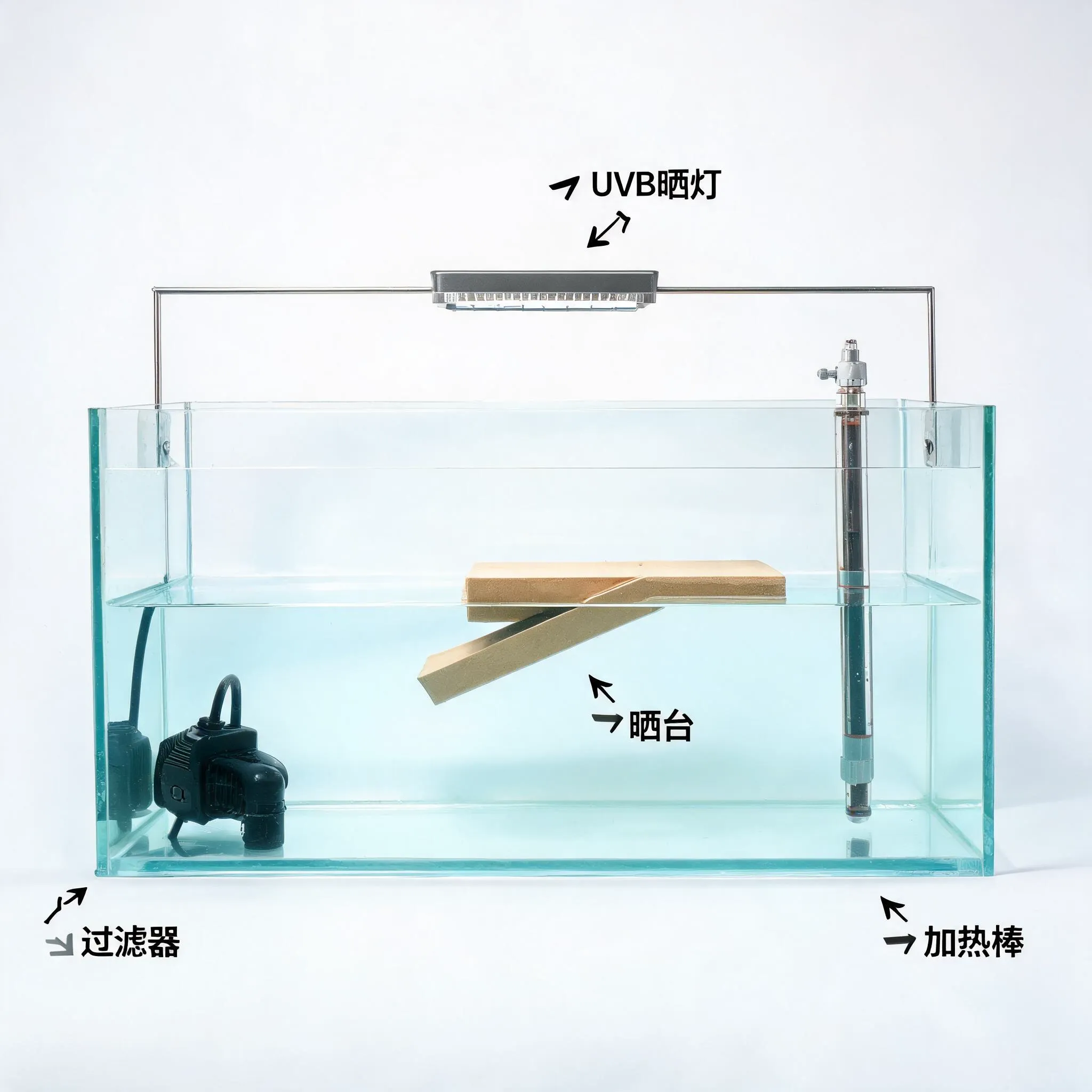
Choose the right tank setup according to the type of turtle.
Water-turtle tank (red-eared sliders, pond turtles, etc.):
- Water-dominated (over 80%)
- A basking platform above the water is a must
- Water depth is 1.5-2 times the shell length
Semi-aquatic tank (Chinese box turtles, etc.):
- Land-dominated (60-70%)
- A shallow water area as a supplement (2-3 cm deep)
- Needs hides and humidity control
Recommended tank sizes:
| Turtle length | Tank size |
|---|---|
| Hatchling (3-5 cm) | 30-40 cm tank |
| Juvenile (10-15 cm) | 50-60 cm tank |
| Adult (20 cm+) | 80 cm tank or larger |
A water-turtle tank needs four essential pieces of equipment: deep water, a basking platform, constant temperature, and filtration.
Deep-water environment:
- Lets the turtle make full use of its swimming ability
- A large water volume changes slowly and holds temperature well
- Provides enough space to exercise and build strength
Basking platform:
- Must be above the water
- Lets the turtle climb out to rest and bask
- Promotes calcium absorption and helps sanitize
Constant-temperature equipment:
- Keep water at 22-28°C
- Prevent temperature swings that cause colds and pneumonia
- Essential in winter
Filtration system:
- Keep the water clear
- Establish a nitrifying system
- Reduce the frequency of water changes
Deep-Water Notes for Hatchlings
Hatchlings have limited stamina. A deep-water tank needs more resting spots or a shallow transition zone to prevent exhaustion and drowning.
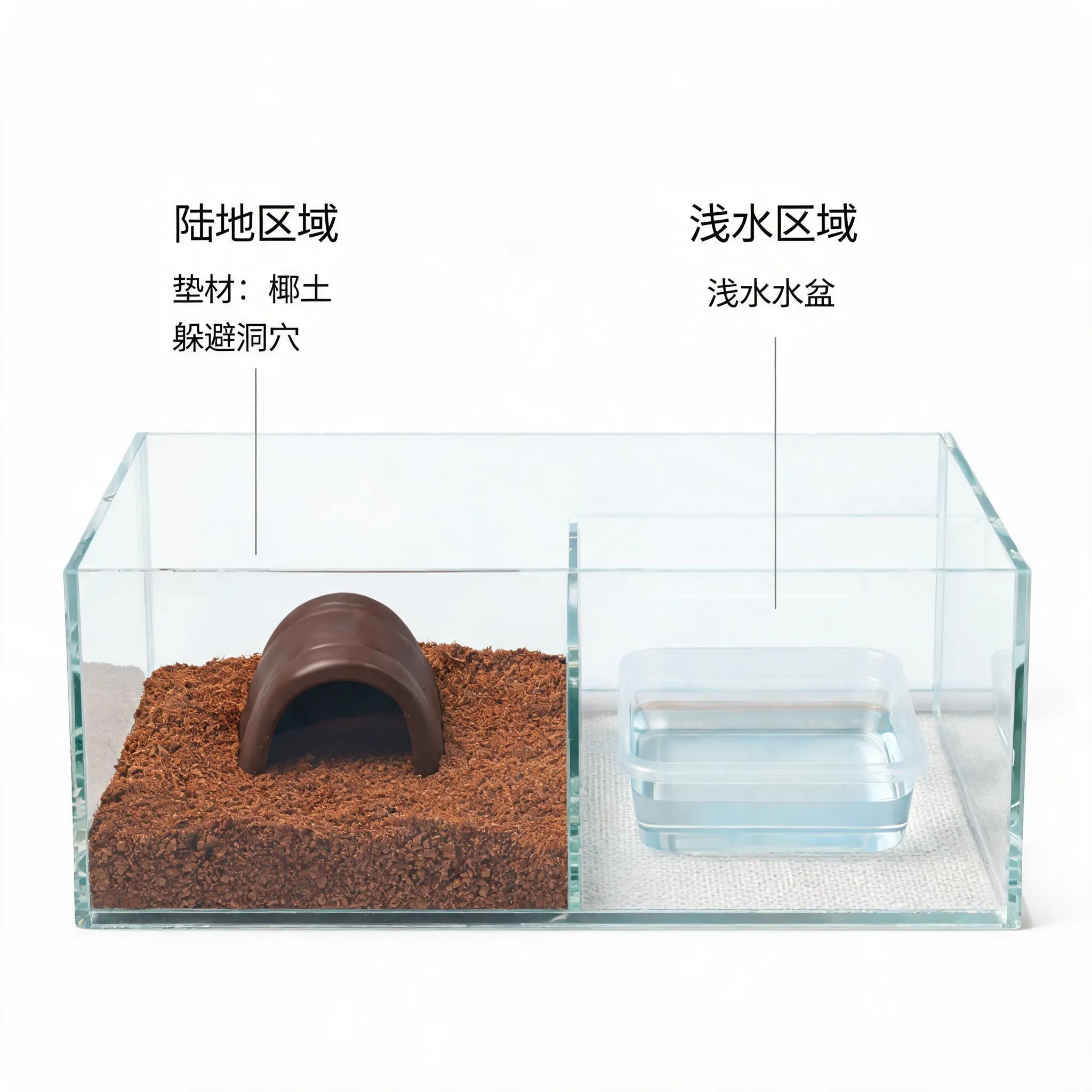
Semi-aquatic turtles such as the Chinese box turtle need a land-dominant setup.
Land area:
- Makes up 60-70% of the tank area
- Substrate: garden soil, red clay, coconut coir (5-10 cm thick)
- Top it with akadama for a more attractive look
- A hide is a must
Shallow water area:
- 2-3 cm deep (just over the shell)
- Mainly for soaking and rehydration
- The water area makes up 30-40%
Humidity control:
- Keep humidity at 60-80%
- Mist on a schedule (2-3 times a day)
- Ferns and moss can be planted
Escape prevention:
- This species climbs well
- The tank edge should be 20-30 cm high
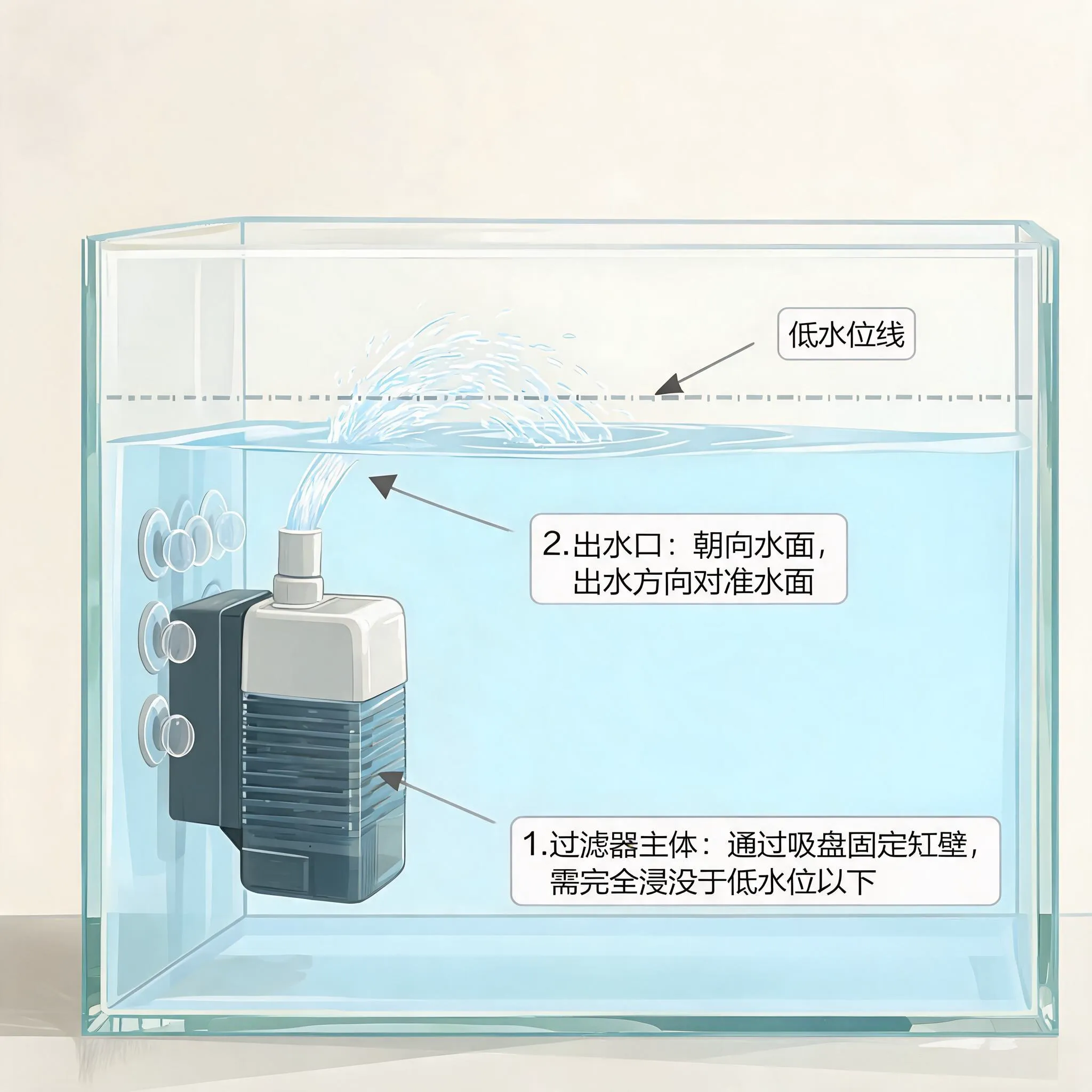
A filter is the key equipment for maintaining water quality.
Choosing the filter type:
| Tank size | Recommended filter |
|---|---|
| Small (30 cm) | Internal filter, low-water-level filter |
| Medium (50 cm) | External hang-on-back filter |
| Large (80 cm+) | External canister filter |
Installation points:
- Flow rate: 3-5 times the tank volume per hour
- Keep the outlet from blasting directly at the turtle
- Layer the media: filter floss → bio sponge → ceramic rings
Routine maintenance:
- Rinse the filter floss every week
- Replace part of the media every month
- Establishing a nitrifying system takes time
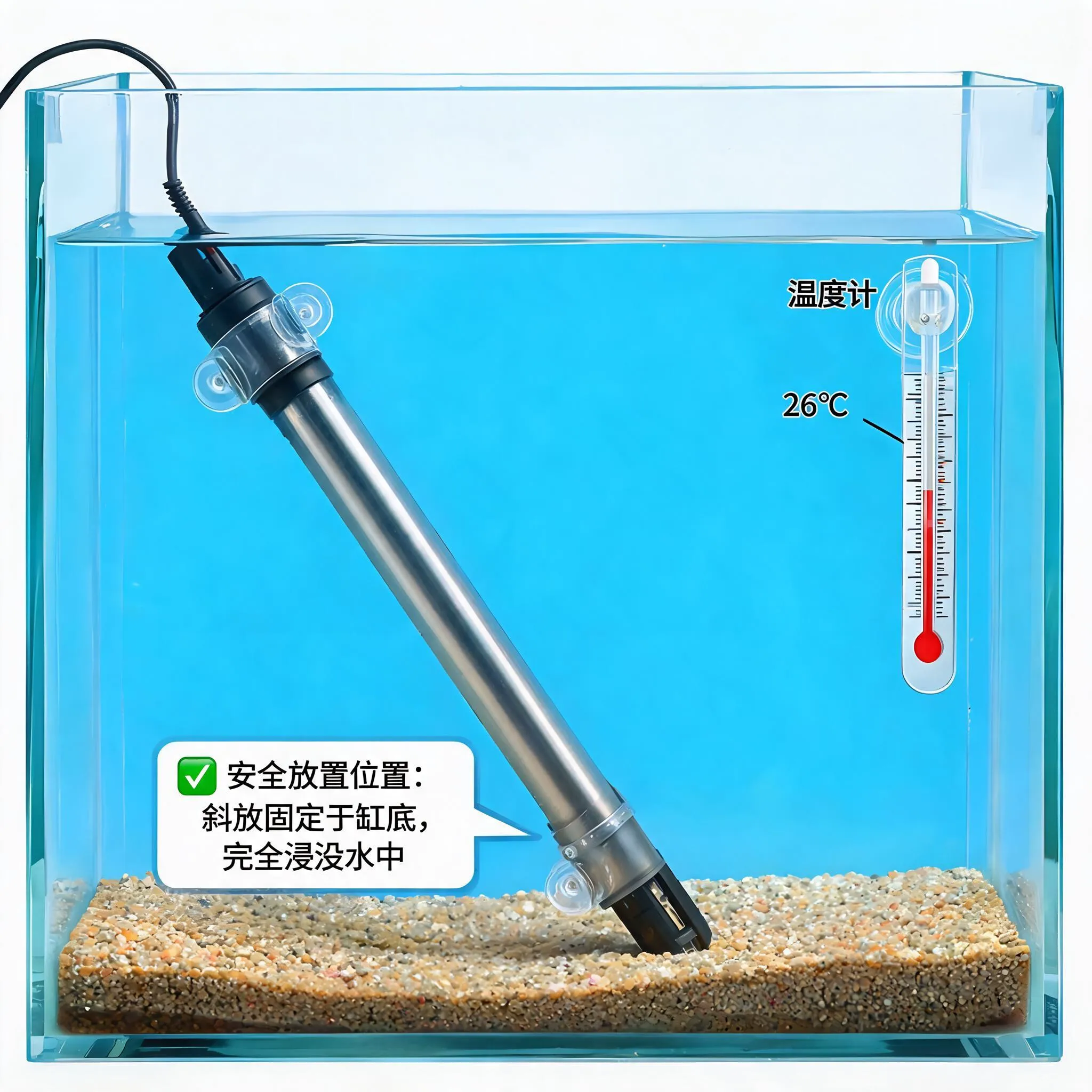
A heater is essential equipment for winter.
Choosing a heater:
- Power: 100W heater per 50 liters of water
- Choose an anti-dry-burn model for safety
- Pair it with a thermometer to monitor
Installation points:
- Fully submerge it in water
- Keep it away from the basking platform to avoid temperature differences
- Secure it firmly to prevent movement
Temperature settings:
- Summer: 22-25°C
- Winter heated overwintering: 25-28°C
- Water-change temperature swings no more than 3°C
Safety notes:
- Turn off the heater before changing water
- Avoid dry-burn damage
- Check the accuracy of the thermostat regularly
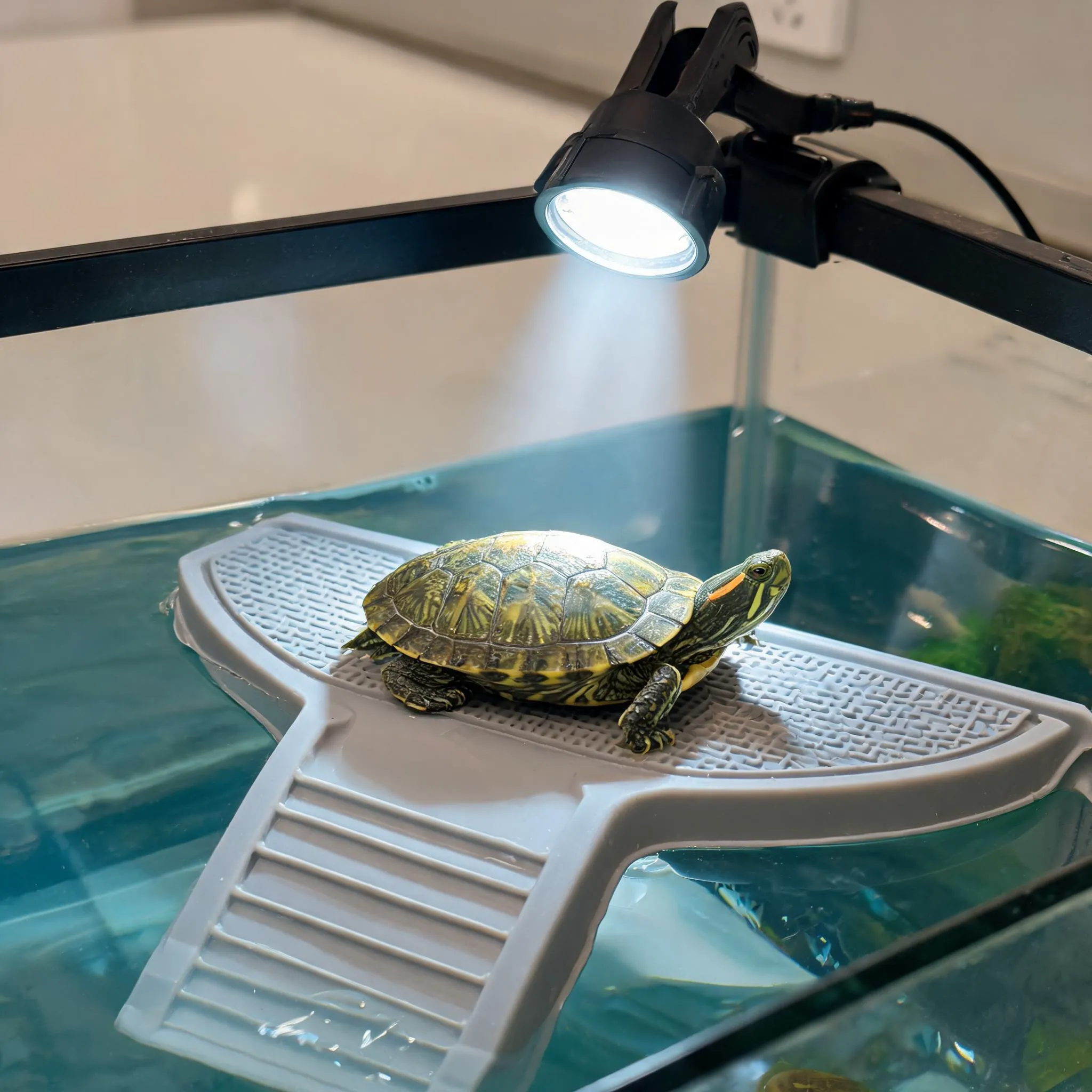
The basking area is key to the turtle's health.
Basking platform types:
- Floating island platform: suited to deep-water tanks
- Fixed platform: suited to shallow-water tanks
- Wall-type platform: provides a hiding space
Basking light:
Natural sunlight:
- Bask 2-3 times a week
- In weaker morning or afternoon sun
- 30 minutes each time
UVB basking lamp (a must indoors):
- Expose for 8-10 hours a day
- Keep the tube 20-30 cm from the turtle
- Replace the tube every 6-12 months
Basking area temperature:
- Basking spot temperature 30-35°C
- A shaded area is needed to avoid overheating