
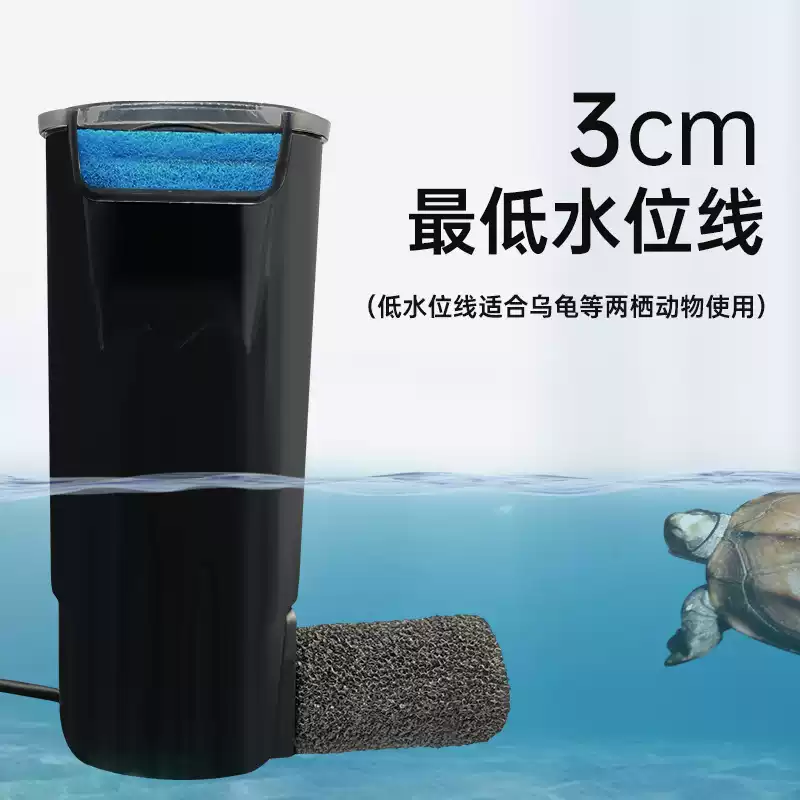
Nitrifying bacteria are a group of bacteria that can convert ammonia nitrogen into nitrate, and they are indispensable microorganisms in the turtle-tank ecosystem. They include two main types: ammonia-oxidizing bacteria (which convert ammonia into nitrite) and nitrite-oxidizing bacteria (which convert nitrite into nitrate). This process is called nitrification and is the key mechanism for maintaining stable water quality.
Ammonia-Oxidizing Bacteria (AOB)
Ammonia-oxidizing bacteria (such as Nitrosomonas) handle the first step: converting toxic ammonia (NH₃/NH₄⁺) into nitrite (NO₂⁻). Ammonia is produced by the decomposition of turtle waste and leftover food and is highly toxic to turtles. The efficiency of AOB determines how fast ammonia is removed from the water.
Nitrite-Oxidizing Bacteria (NOB)
Nitrite-oxidizing bacteria (such as Nitrobacter) handle the second step: converting nitrite into nitrate (NO₃⁻). Nitrite is also toxic, impairing the turtle's hemoglobin's ability to carry oxygen. Nitrate is less toxic and can be diluted by water changes.
Nitrification is a two-step oxidation process that requires oxygen. The whole process can be written as chemical equations:
Step 1: 2NH₄⁺ + 3O₂ → 2NO₂⁻ + 2H₂O + 4H⁺ (ammonia oxidation)
Step 2: 2NO₂⁻ + O₂ → 2NO₃⁻ (nitrite oxidation)
Overall: NH₄⁺ + 2O₂ → NO₃⁻ + 2H⁺ + H₂O
This process consumes oxygen and produces acidic substances, so a turtle tank must maintain sufficient oxygen and adequate pH buffering capacity.
The Energy Source of Nitrifying Bacteria
Nitrifying bacteria are autotrophic: they obtain energy from the nitrification reaction and do not need organic matter as food. This sets them apart from the heterotrophic bacteria that break down organic matter. Nitrifying bacteria grow slowly, with reproduction cycles lasting from hours to days, whereas heterotrophic bacteria can reproduce one generation in just 20 minutes. That is why establishing a nitrifying system in a new tank takes several weeks.
The Importance of Oxygen
Nitrification is an oxidation process, and converting 1 mg of ammonia nitrogen requires about 4.57 mg of oxygen. A turtle tank must ensure an adequate oxygen supply: dissolved oxygen at the surface should stay above 5 mg/L. Aerating with a filter, agitating the surface, and using an air pump are all effective ways to raise oxygen levels. When oxygen is insufficient, nitrifying bacteria become less active and water quality deteriorates quickly.
Turtles are high-waste animals, producing far more ammonia nitrogen per day than fish. A 20 cm red-eared slider can excrete 5-10 mg of ammonia nitrogen a day; without nitrifying bacteria to process it, the ammonia concentration would rise to lethal levels (>2 mg/L) within days. Nitrifying bacteria are the core of turtle-tank water quality management—like an invisible purification plant, working around the clock to process toxic substances.
The Harm of Ammonia Nitrogen
Ammonia (NH₃) is the primary product of decomposing turtle waste and is highly toxic to turtles:
- Concentration 0.5-1 mg/L: reduced appetite and activity
- Concentration 1-2 mg/L: difficulty breathing, mucosal damage
- Concentration >2 mg/L: possible acute poisoning and death
Turtles tolerate ammonia less well than fish, so ammonia nitrogen must be strictly controlled below 0.5 mg/L.
The Harm of Nitrite
Nitrite (NO₂⁻) impairs hemoglobin's ability to carry oxygen, causing oxygen deprivation in turtles:
- Concentration 0.1-0.5 mg/L: difficulty breathing, floating
- Concentration >1 mg/L: possible nitrite poisoning ("brown blood disease")
Nitrite concentration should be kept below 0.1 mg/L.
Nitrate Is Relatively Safe
Nitrate (NO₃⁻) is less toxic, and concentrations below 50 mg/L generally cause no direct harm to turtles. But high nitrate levels promote algae growth and affect water quality. It is recommended to keep nitrate below 40 mg/L, which can be diluted by regular water changes.
A newly set up turtle tank has no nitrifying bacteria and its water quality will deteriorate quickly. Establishing a nitrifying system takes 2-4 weeks; this process is called "cycling" the water or "seeding" the tank. The correct approach is to introduce nitrifying bacteria gradually and let them multiply on the filter media to form a stable colony.
Tank Cycling Steps
Step 1 (days 1-3): install the filter, add dechlorinated water, turn on the aeration equipment; do not add the turtle.
Step 2 (days 4-7): add a nitrifying bacteria product or filter media from an established tank, and add a small amount of food (such as a small piece of shrimp) as an ammonia source.
Step 3 (days 8-14): test ammonia nitrogen and nitrite every day, waiting for the peak to appear and then fall.
Step 4 (days 15-21): when both ammonia nitrogen and nitrite drop to 0 and nitrate begins to accumulate, the nitrifying system is established successfully.
Step 5 (after day 22): add the turtle and keep monitoring water quality for a week.
Culture Conditions
Optimal conditions for culturing nitrifying bacteria:
- Temperature: 25-30°C (the normal range for a turtle tank)
- pH: 7.0-8.0 (nitrifying bacteria are most active in neutral to slightly alkaline conditions)
- Oxygen: dissolved oxygen >5 mg/L (keep the surface moving)
- Ammonia source: provide a moderate amount of organic matter to decompose and produce ammonia
Note: nitrifying bacteria dislike strong light, so filter media should avoid direct sunlight.
Common Misconceptions
Misconception 1: cycling with the turtle already in the tank—wrong! The turtle produces too much ammonia for the bacteria to process in time, poisoning the turtle.
Misconception 2: adding the turtle right after adding nitrifying bacteria—wrong! The bacteria need time to multiply, and their processing capacity is insufficient before the colony forms.
Misconception 3: large water changes to help cycle the tank—wrong! Frequent water changes carry away the ammonia source, leaving the bacteria with no "food" to multiply.
Misconception 4: adding nitrifying bacteria directly to tap water—wrong! The chlorine in tap water kills the bacteria, so the water must be dechlorinated first.

Once established, nitrifying bacteria need careful maintenance. They attach to the surface of the filter media, forming a biofilm. Protecting nitrifying bacteria is protecting the foundation of stable water quality.
Water-Change Notes
When changing water:
- Change no more than 1/3 of the total volume each time, to avoid greatly diluting the bacteria's food source
- New water must be dechlorinated for 24 hours; chlorine kills nitrifying bacteria
- Keep the new water within 3°C of the tank water; a sudden temperature change affects bacterial activity
- A small amount of nitrifying bacteria product can be added after a water change
Recommended water-change frequency for a turtle tank: change 1/3 each week; do not replace all the water.
Filter Cleaning Tips
The filter is the main habitat of nitrifying bacteria, so be careful when cleaning:
- Do not clean all the media at once; clean them in batches
- Rinse the media in old tank water, not tap water
- Gently rub off surface debris; do not scrub excessively
- Clean bio media such as ceramic rings and bacteria houses every 3-6 months
- Rinse the filter floss every 2-4 weeks
Remember: the brown slime on the filter media is the nitrifying bacteria's biofilm—do not wash it off!
Signs That Nitrifying Bacteria Are Dying
Signs that nitrifying bacteria have died or become less active:
- Water suddenly turns cloudy (milky)—mass bacterial death and heterotrophic bacteria multiplying
- Ammonia nitrogen suddenly rises—the bacteria's processing capacity has dropped
- The turtle shows discomfort (floating, refusing food)—ammonia poisoning
If these appear, stop water changes immediately, add a nitrifying bacteria product, increase aeration, and wait for the nitrifying system to recover.
There are many nitrifying bacteria products on the market; choosing and using them requires some basic knowledge.
Types of Nitrifying Bacteria Products
Liquid nitrifying bacteria: contains dormant nitrifying bacteria, activates quickly (1-2 days), suited to new-tank cycling and emergency water quality repair.
Dry powder nitrifying bacteria: contains dried nitrifying bacteria and culture medium, stores for a long time but takes 3-5 days to activate.
Compound nitrifying bacteria: contains nitrifying bacteria and other beneficial bacteria (such as photosynthetic bacteria and lactic acid bacteria), with more comprehensive functions.
Advice: use liquid nitrifying bacteria for cycling a new tank and compound nitrifying bacteria for routine maintenance.
Usage Notes
When using a nitrifying bacteria product:
- Make sure the water has been dechlorinated before adding; chlorine kills the bacteria
- Increase aeration after adding; the bacteria need oxygen to activate
- Turn off UV lamps for 24-48 hours; UV kills nitrifying bacteria
- Do not do a large water change right after adding
- Follow the instructions for dosage; a higher dose does not work faster
Typical dosage: add 10-20 ml of liquid nitrifying bacteria per 100 L of water.
Filter media are the "home" of nitrifying bacteria, and choosing the right media is crucial to the nitrifying system.
Types of Bio Filter Media
Ceramic rings: porous structure with a large surface area, good attachment for nitrifying bacteria, and a moderate price. Service life about 1-2 years.
Bacteria house: professional nitrifying bacteria media with an even larger surface area, the best performance, and a higher price. Service life about 2 years.
Bio sponge: porous sponge structure that combines mechanical filtration and biological function; suited to small tanks. Replace every 6-12 months.
Quartz balls: high-surface-area media with performance comparable to a bacteria house and good durability.
Advice: use a bacteria house or ceramic rings for large turtle tanks and bio sponge for small tanks.
Media Configuration Principles
Order of filter media (from inlet to outlet):
Layer 1: filter floss—traps large particles and protects the media behind it
Layer 2: bio sponge—traps fine particles and performs initial biological treatment
Layer 3: ceramic rings/bacteria house—the main habitat of nitrifying bacteria
Layer 4: outlet
Recommended media volume: bio media should reach 5-10% of the turtle tank's water volume. For example, a 100 L tank should have 5-10 L of bio media.