
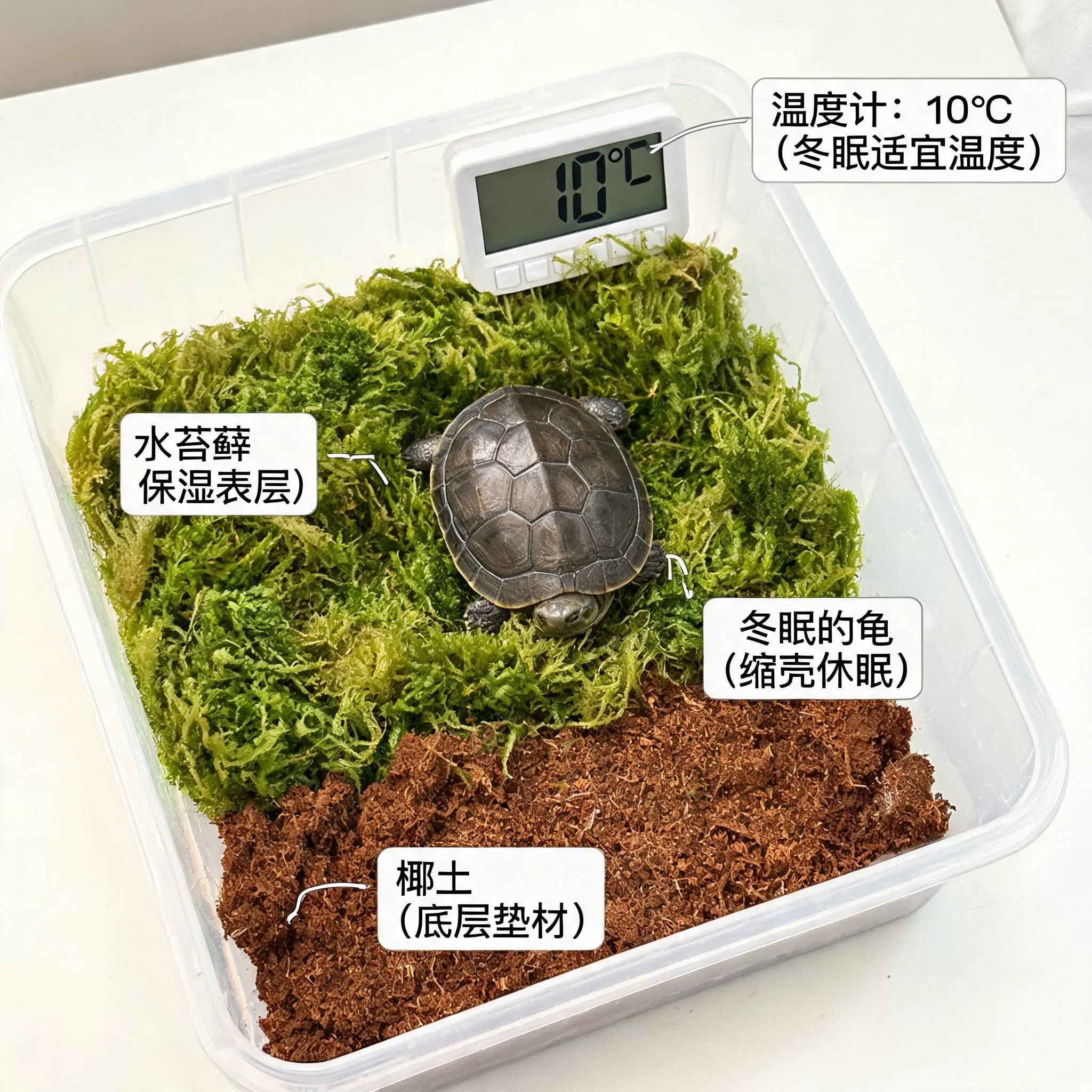
Hibernation is a natural physiological cycle for turtles, but not every turtle needs to hibernate.
Species suited to hibernation:
- Chinese pond turtle: strong hibernation ability
- Chinese box turtle: hibernates naturally
- Red-eared slider: may hibernate or be overwintered with heat
Cases where hibernation is not advised:
- Hatchlings (under 5 cm long)
- Sick or weak turtles
- Newly acquired turtles (stress period)
- Turtles in poor condition
Hibernation temperature:
- Ideal temperature: 5-15°C
- Too warm (>15°C): the turtle burns stored energy
- Too cold (<3°C): frostbite may occur
Thorough preparation is needed before hibernation.
Health check:
- Confirm the turtle is healthy with no illness
- Check that the weight is sufficient (the carapace feels hard when pinched)
- Observe whether appetite is normal
Fasting to clear the gut (2 weeks before hibernation):
- Week 1: feed normally
- Week 2: gradually reduce feeding
- Final 3-5 days: stop feeding
- Let the turtle empty its gut
Environment setup:
Aquatic turtle hibernation setup:
- Shallow-water hibernation: water just over the shell
- Keep water at 5-10°C
- Place it in a cool, quiet spot
Semi-aquatic turtle hibernation setup:
- Land-based hibernation is the main approach
- Substrate: coconut coir, moss (10 cm deep)
- Keep humidity at 50-60%
- Provide a hide
Check regularly during hibernation.
Check frequency:
- 1-2 times a week
- Observe the turtle's condition
- Check the ambient temperature
What to check:
- Whether the turtle shows noticeable activity
- Whether the eyes are clear
- Whether the shell is abnormal
- Whether breathing is normal
Environment maintenance:
- Keep the temperature stable (5-10°C)
- Aquatic turtles: change water once a month
- Semi-aquatic turtles: keep the substrate moist
- Avoid disturbance
Handling abnormalities:
- Frequent activity: temperature too high
- Motionless but eyes closed: may be normal
- If anything abnormal is found, end hibernation immediately and raise the temperature to observe
Hibernation Duration
Natural hibernation usually lasts 3-4 months. It is shorter in southern regions and longer in the north. Adjust naturally according to the local temperature.
The end of hibernation requires a slow wake-up.
When to wake:
- Natural temperatures rise above 15°C
- The turtle begins to move on its own
Wake-up steps:
Raise the temperature slowly:
- Raise it 1-2°C per day
- From the hibernation temperature up to 25°C
- Do not rush to place it in warm water
Rehydrate:
- Let the turtle soak in shallow water first
- Replace the water lost during hibernation
- Water temperature should match the ambient temperature
Observe its condition:
- Check whether its activity is normal
- Watch how its appetite returns
- Check for post-hibernation illness
Start feeding:
- Try feeding after the temperature reaches 25°C
- Start with easily digestible food (krill)
- Small amounts more often, gradually resuming
Winter-Wake Food
Use a specially formulated winter-wake turtle food to help the turtle quickly regain strength and replace the nutrients used during hibernation.
Common Problems After Waking
After waking, the turtle may refuse food; this is a normal adaptation period. Keep a constant temperature above 25°C, rest it for 3-5 days, and use krill to entice eating.
Overwintering with heat is a safer alternative.
When it applies:
- Hatchlings
- Sick turtles
- Beginner keepers
- Difficult temperature control
Heating method:
- Use a heater to keep water at 25-28°C
- Continue feeding normally
- Provide a basking area
Advantages of heated overwintering:
- The turtle's growth does not stall
- Avoids the risks of hibernation
- Better suited to beginners
Notes:
- Temperature swings no more than 3°C
- Change water regularly to maintain quality
- Continue to provide UVB lighting