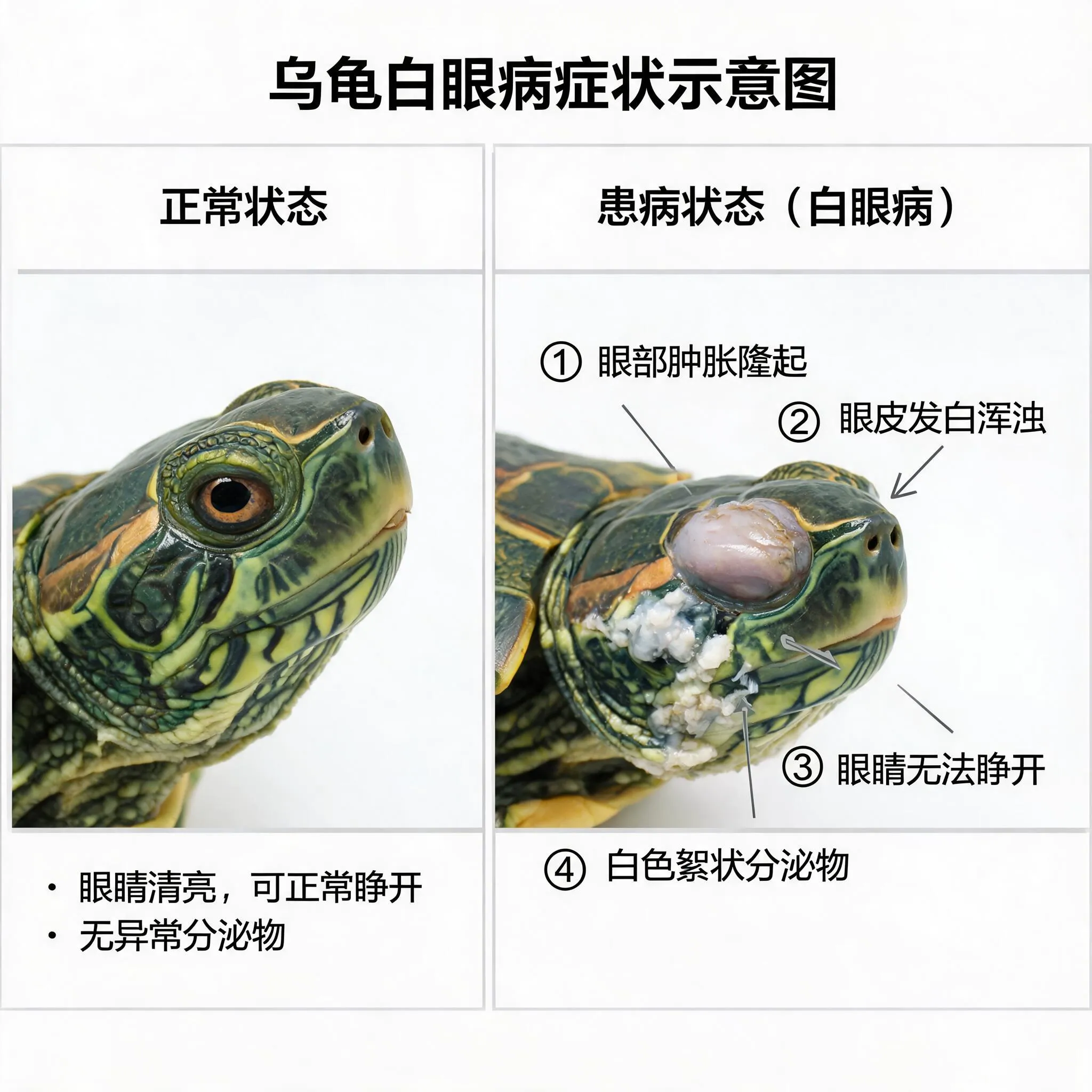
White eye disease is the most common eye condition in turtles. The main symptoms include:
Early symptoms:
- The eyes are slightly swollen and the eyelids are half-open
- A small amount of white discharge around the eyes
- The turtle frequently scratches at its eyes with its claws
Mid-stage symptoms:
- The eyes are noticeably swollen and whitish
- White discharge increases and covers the whole eye
- The turtle cannot open its eyes
- Reduced activity and appetite
Severe symptoms:
- Severe eye congestion and corneal erosion
- Both eyes are completely covered by a white film
- Secondary systemic infection may occur
- Refusal to eat or drink, life-threatening
The main causes of white eye disease are as follows:
Water quality problems (most common):
- Bacteria and fungi in the water exceed safe limits
- Ammonia and nitrite concentrations are too high
- Water is not changed for long periods and deteriorates
Environmental irritation:
- Water temperature swings too large (over 3°C)
- Strong light or chemical irritation
- The enclosure is not disinfected regularly
Nutritional deficiencies:
- Vitamin A deficiency weakens the eyes' resistance
- A monotonous long-term diet is nutritionally unbalanced
Trauma and infection:
- The eyes are bitten by other turtles
- Bacterial infection after eye trauma
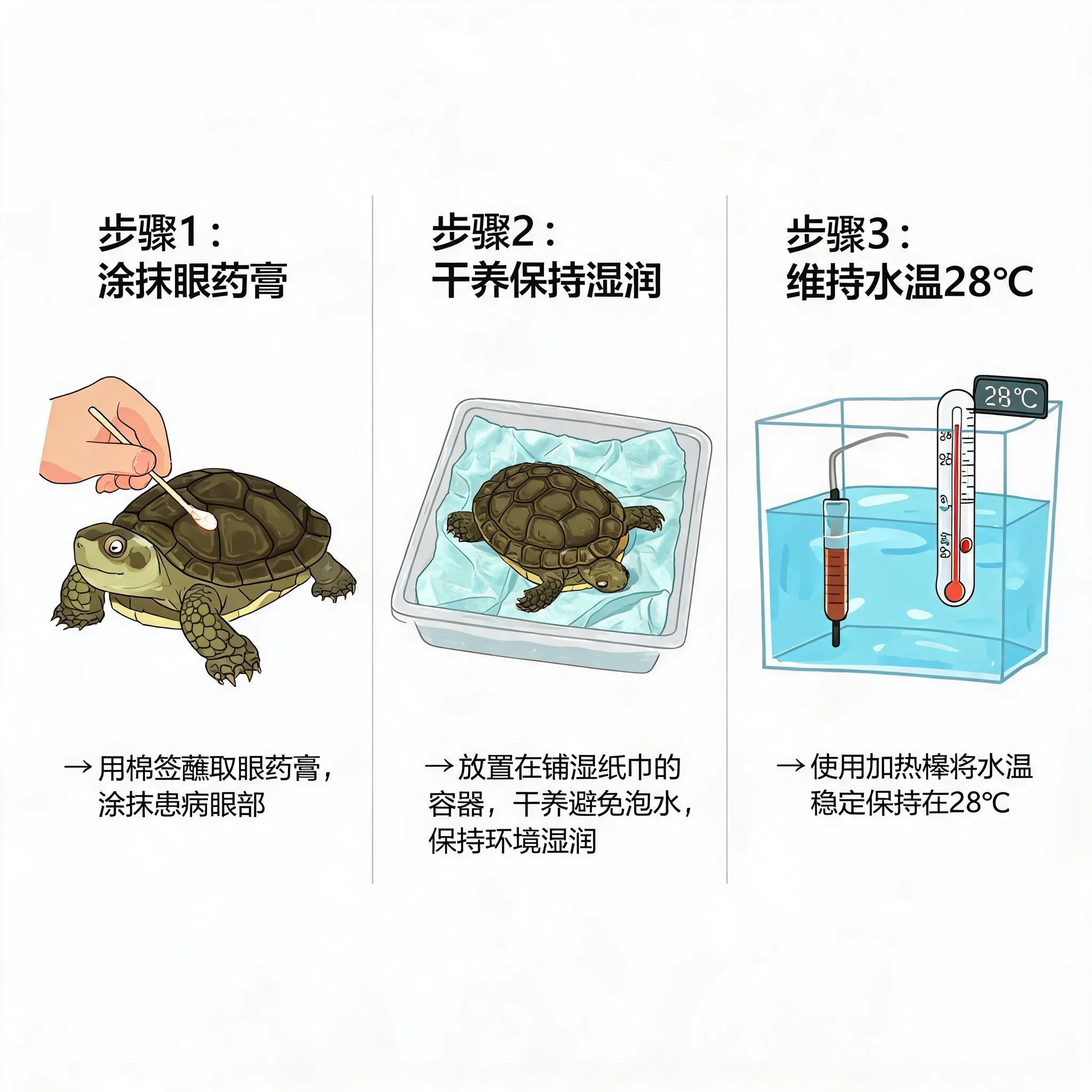
Step 1: Clean the eye discharge
Use a cotton swab dipped in warm water to gently wipe the eyes and remove the white discharge. Be gentle to avoid injuring the eyes.
Step 2: Apply medication
Mild cases:
- Use chloramphenicol eye drops, twice a day
- Apply erythromycin eye ointment around the eyes
Severe cases (eyes cannot open):
- First soften the discharge with warm water and clean it away
- Apply erythromycin or chlortetracycline eye ointment
- Combine with systemic antibiotics (such as amoxicillin)
Step 3: Supportive dry housing
After applying medication, keep the turtle dry for 30 minutes to 2 hours so the ointment is absorbed. During dry housing, keep the ambient temperature at 25-28°C.
Step 4: Improve water quality
- Replace all the water immediately
- Disinfect the enclosure with potassium permanganate
- Keep water at 25-28°C to aid recovery
Step 5: Nutritional support
- Add vitamin A to the food
- Offer nutrient-rich foods (liver, krill) to boost resistance
Medicated Bath as a Supportive Therapy
Add 15 mg of nitrofurazone or furazolidone per liter of water and let the turtle soak for 30 minutes. Twice a day, it can effectively support treatment.
A 2% saltwater soak for 1 hour a day can also help clean dirt from the eyes.
Treatment Timeline
Mild cases: recover in 3-7 days
Moderate cases: 7-14 days
Severe cases: 2-3 weeks of continuous treatment
Important: white eye disease does not heal on its own—treatment must begin immediately after it is found!
Prevention beats treatment. Daily prevention tips:
Keep the water clean
- Change 1/3 of the water each week; do not replace all of it
- Remove residue and change water 1 hour after feeding
- Use a filter to keep water quality stable
Disinfect regularly
- Disinfect the enclosure monthly with potassium permanganate
- Clean and replace filter media on a schedule
Provide a basking area
- Set up a basking platform and let the turtle bask 4-6 hours a day
- UVB lighting promotes vitamin D synthesis
- Dry basking helps keep the eyes healthy
Balanced nutrition
- Regularly add liver-type food to supply vitamin A
- Vary the diet and avoid a monotonous one
Avoid temperature swings
- Keep water stable at 22-28°C
- Match new water temperature to the tank water when changing
- Use a heater to keep the temperature constant