
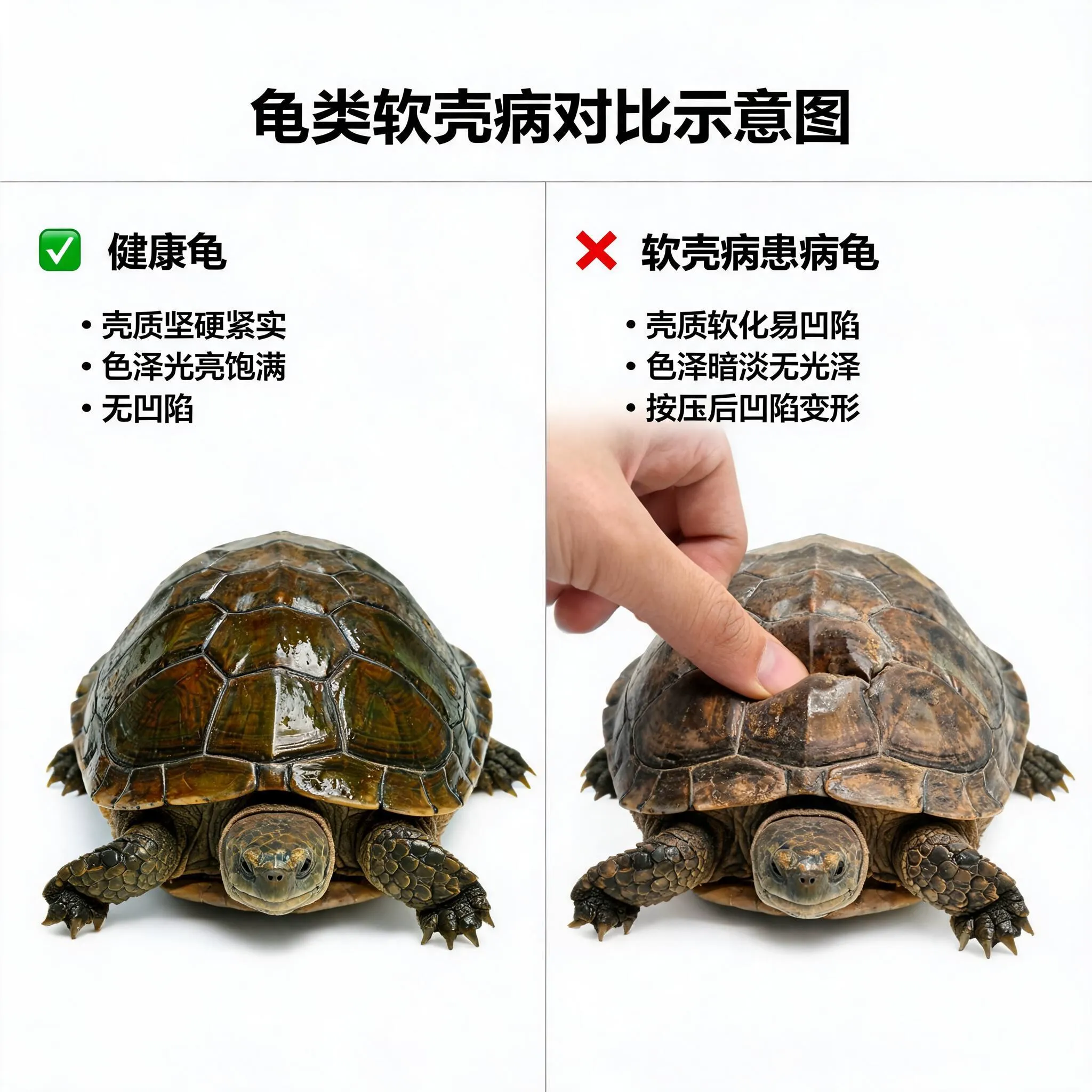
Soft shell disease, also called metabolic bone disease (MBD), is a common condition in hatchling turtles.
Main symptoms:
- The shell becomes soft and sinks noticeably when pressed
- The carapace is flat or deformed
- Weak limbs and slow movement
- Reduced appetite and slow growth
Severe symptoms:
- The shell softens severely and deforms over large areas
- Skeletal deformities
- Curled and deformed claws
- Convulsions may occur
Early detection:
Gently press the turtle's carapace; a healthy shell should be hard. If it feels springy or sunken when pressed, the shell is softening and calcium and UVB must be provided immediately.
The core causes of soft shell disease are calcium deficiency and insufficient UVB.
Insufficient UVB (most common):
- No sunlight or UVB lamp exposure
- Vitamin D cannot be synthesized and calcium cannot be absorbed
- Especially likely with indoor housing
Calcium deficiency:
- Low calcium content in the diet
- Feeding a single type of food for a long time
- No calcium supplement
Other causes:
- Prolonged low-temperature housing slows metabolism
- Impaired intestinal absorption
- Poor water quality hinders calcium absorption
Step 1: Provide UVB lighting
Install a UVB basking lamp and expose the turtle for 8-10 hours a day. UVB wavelengths promote vitamin D synthesis and help calcium absorption.
Step 2: Supplement calcium
- Add calcium powder to the food
- Place cuttlebone for the turtle to gnaw
- Offer calcium-rich foods (shrimp shells, fish bones)
Step 3: Natural sunlight
Bask in the sun 2-3 times a week for 30 minutes each time. UVB from natural sunlight is more effective. Be careful to avoid overexposure that causes dehydration.
Step 4: Improve the habitat
- Keep water at 25-28°C to promote metabolism
- Keep the water clean
- Provide a basking platform so the turtle can dry out and bask
Treatment timeline:
Mild cases: improve in 2-4 weeks
Moderate cases: continuous supplementation for 2-3 months
Severe cases: difficult to reverse; long-term care needed
Prevention Is Key
Prevention of soft shell disease is more important than treatment! Hatchlings grow fast and have high calcium needs, so adequate UVB and calcium supplementation must be provided from the start. Indoors, a UVB lamp is a must.
Prevention beats treatment. Daily prevention tips:
A UVB basking lamp is a must
- Expose for 8-10 hours a day
- Replace the tube every 6-12 months (UVB output fades)
- A distance of 20-30 cm from the turtle works best
Regular sunlight
- 2-3 times a week
- In weaker morning or afternoon sun
- 30 minutes each time
Supplement calcium
- Add calcium powder to the food
- Provide cuttlebone
- Feed calcium-rich foods
Balanced nutrition
- Vary the diet
- Feed liver regularly to supplement vitamin D
Suitable temperature
- Keep 25-28°C to promote metabolism