
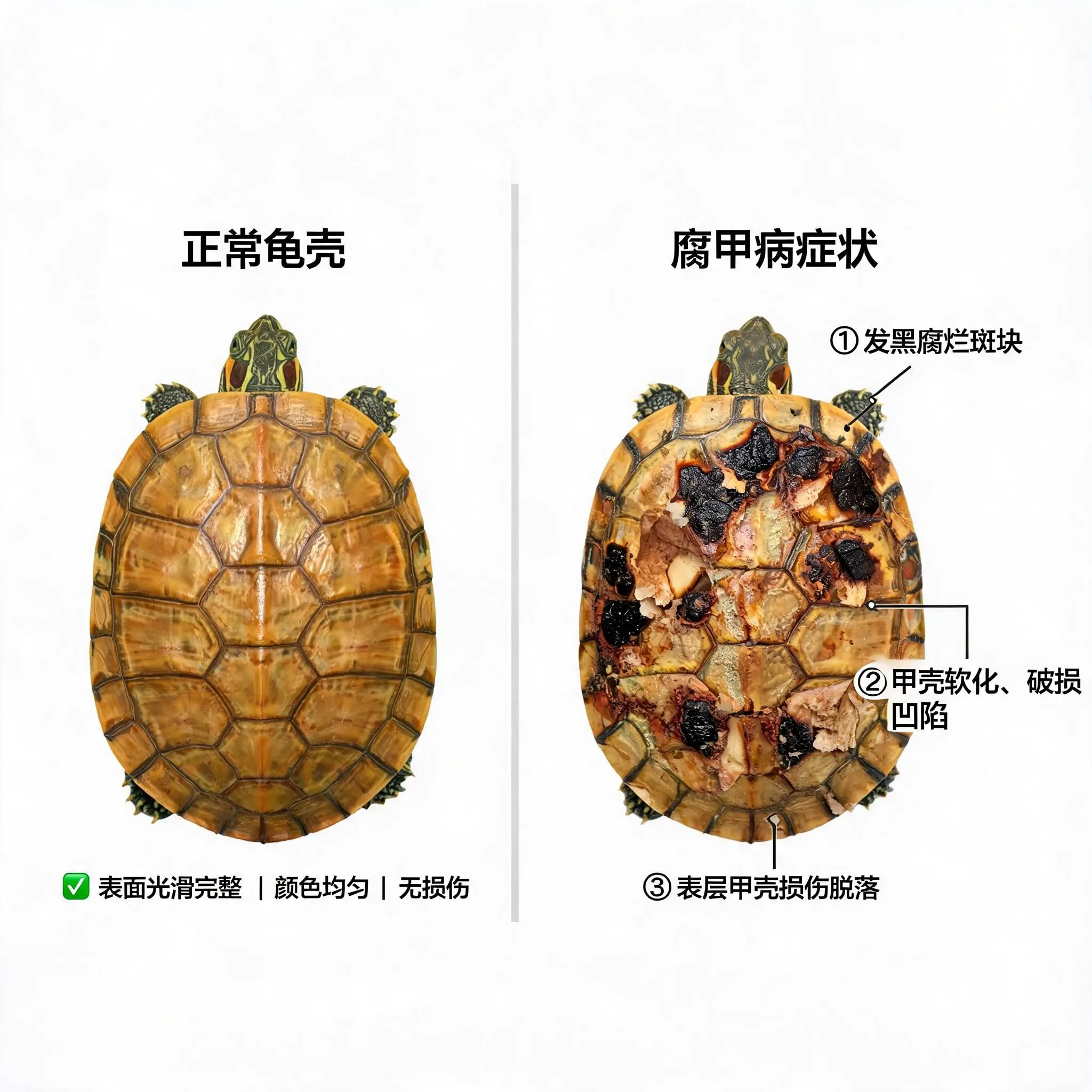
Shell rot is a common shell disease in turtles. The main symptoms include:
Early symptoms:
- White or gray spots appear on the shell surface
- Part of the shell softens, with a sunken feel when pressed
- Reduced activity and appetite
Mid-stage symptoms:
- The affected area enlarges and the shell softens noticeably
- A rotten odor appears
- Bloody fluid may seep from the affected area
- The turtle frequently scrapes its shell
Severe symptoms:
- Large areas of the shell rot through and perforate
- Deep tissue is exposed and bone is damaged
- Systemic infection that threatens life
The main causes of shell rot are as follows:
Water quality problems:
- Bacteria levels in the water exceed safe limits
- Water is not changed for long periods and deteriorates
- Ammonia and nitrite concentrations are too high
Trauma and infection:
- The shell is bitten by other turtles
- Abrasions become infected with bacteria
- Falls and collisions damage the shell
Environmental problems:
- The enclosure is not disinfected regularly
- Humidity is too high or too low
- Lack of basking weakens the shell's resistance
Nutritional deficiencies:
- Insufficient UVB leads to calcium deficiency
- A monotonous long-term diet is nutritionally unbalanced
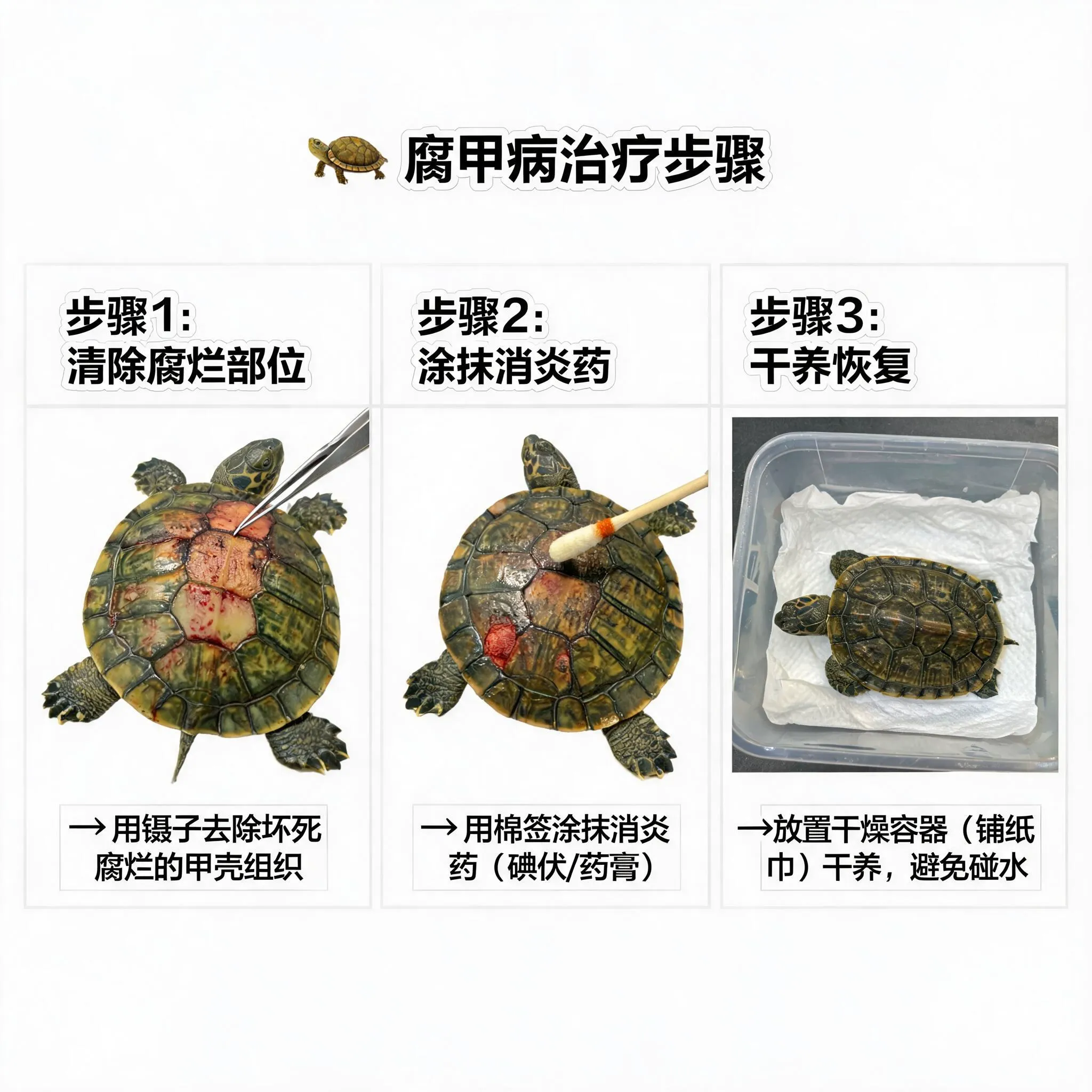
Step 1: Remove the rotting tissue
Use a disinfected cotton swab to remove the rotting shell tissue, working gently to avoid damaging deeper tissue. Clean thoroughly to make sure all the rotting material is removed.
Step 2: Disinfection
Apply povidone-iodine solution to the affected area 2-3 times a day. Hydrogen peroxide can also be used to rinse the rotting area before applying iodine.
Step 3: Apply ointment
After cleaning and disinfecting, apply an antibiotic ointment (erythromycin or chlortetracycline). Spread the ointment evenly to cover the affected area.
Step 4: Dry housing as the main approach
After applying the medication, keep the turtle dry, allowing one hour in water each day for hydration. During dry housing, keep the ambient temperature at 25-28°C with moderate humidity.
Step 5: Continue treatment
Shell rot has a long treatment course and requires 2-3 weeks of continuous care. Repeat the steps above every day until the shell heals and regains its hardness.
Handling Severe Cases
For severe cases with shell perforation or extensive rot, veterinary care and injected antibiotics are needed. Surgery to remove necrotic tissue may be required, followed by systemic antibiotic treatment.
Treatment Timeline
Mild cases: recover in 1-2 weeks
Moderate cases: 2-3 weeks
Severe cases: 4 weeks or more, or veterinary care
Important: shell rot does not heal on its own—treatment must begin immediately after it is found!
Prevention beats treatment. Daily prevention tips:
Keep the water clean
- Change 1/3 of the water each week
- Remove residue after feeding
- Use a filter to keep water quality stable
Disinfect regularly
- Disinfect the enclosure monthly with potassium permanganate
- Clean and replace filter media on a schedule
Provide a basking area
- Set up a basking platform and let the turtle bask 4-6 hours a day
- UVB lighting promotes calcium absorption
- Dry basking helps keep the shell healthy
Avoid trauma
- When cohabiting, keep turtles of similar size
- Avoid falls and collisions
- Treat wounds promptly when found
Balanced nutrition
- Supplement calcium (cuttlebone, calcium powder)
- Vary the diet