Turtle pneumonia is a common winter illness. The main symptoms include:
Early symptoms:
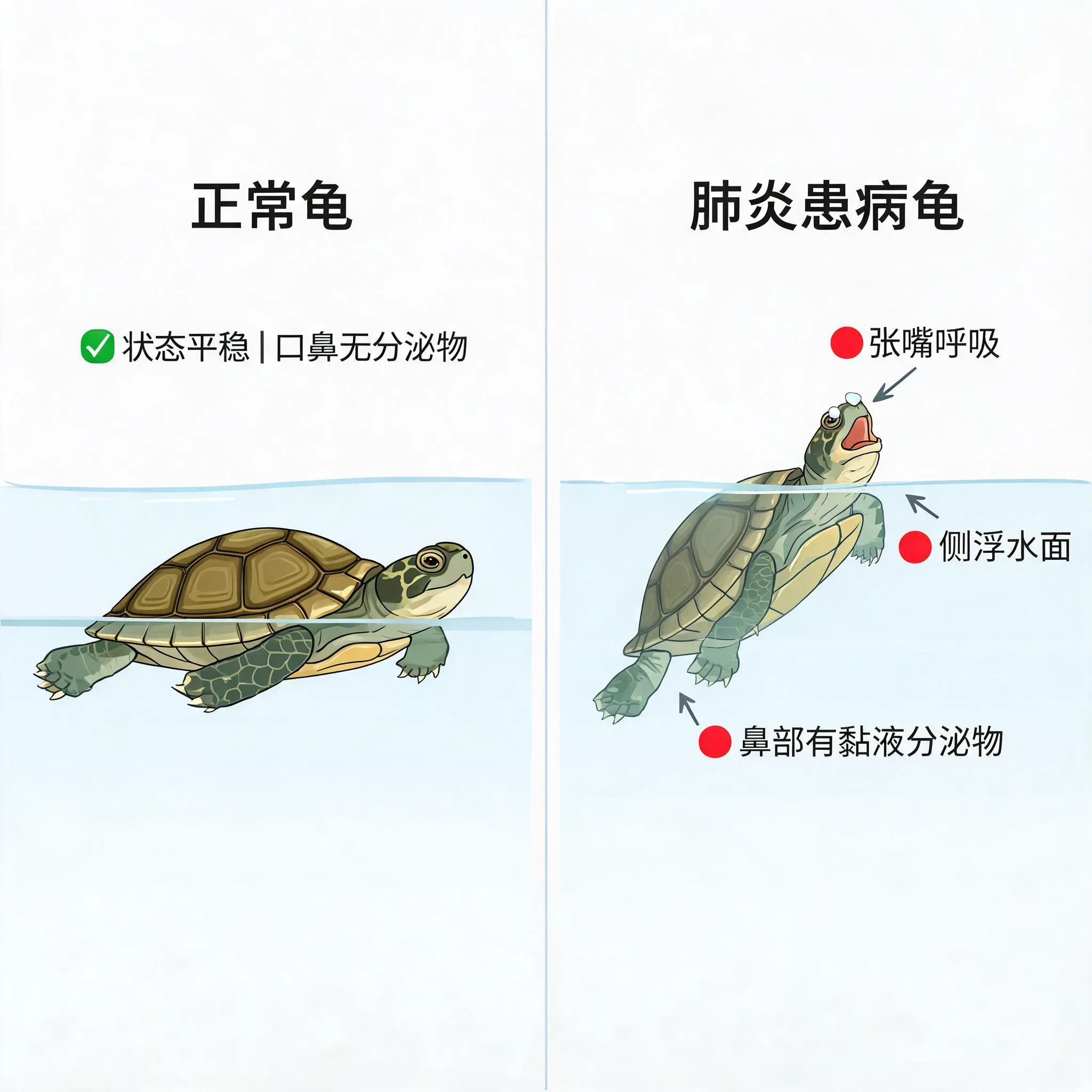
- Bubbles or mucus at the nostrils
- Abnormal sounds when breathing (like calling out)
- Reduced appetite and activity
- Tendency to breathe with the mouth open
Mid-stage symptoms:
- Noticeable difficulty breathing
- Floating sideways or swimming tilted (lung infection affects balance)
- Refusing food and water
- Eyes half-closed and weak
Severe symptoms:
- Heavy discharge from the mouth and nose
- Fully floating on its side, unable to swim normally
- Rapid or labored breathing
- Potentially life-threatening
The main cause of pneumonia is a large temperature swing that lowers immunity, allowing bacteria to infect the lungs.
Large temperature swings (most common):
- Water temperature drops by more than 3°C
- Careless water changes in winter
- The habitat is near a window and exposed to cold drafts
- Heater failure causes temperature fluctuations
Other triggers:
- Temperature changes during transport
- Sudden environmental change when a new turtle is introduced
- Poor water quality lowers resistance
- Vitamin deficiency
Seasonal patterns:
- Highest incidence in winter
- Also common during the spring and autumn transitions
Step 1: Raise and stabilize the temperature
Immediately raise the temperature to 28-30°C and keep it constant. Temperature stability is the foundation of treatment. Use a heater and monitor with a thermometer.
Step 2: A restful environment
- Place the turtle in a quiet environment
- Avoid drafts and disturbance
- Switch from deep water to shallow water (to reduce the effort of swimming)
Step 3: Medication
Mild pneumonia:
- Raise the temperature to 28°C and observe; it may recover on its own
- Add amoxicillin to the food
Moderate pneumonia:
- Use an antibiotic bath (amoxicillin solution)
- Oral anti-inflammatory medication
Severe pneumonia:
- Veterinary care with injected antibiotics is needed
- Combined with nebulization therapy
Step 4: Supportive care
- Keep the water clean
- Provide easily digestible food
- Increase nutrition to boost resistance
Treatment Timeline
Mild cases: may recover 3-5 days after the temperature is raised
Moderate cases: 7-14 days of continuous treatment
Severe cases: veterinary care needed, longer treatment course
Important: pneumonia has a high mortality rate—raise the temperature and treat immediately after it is found!
Spotting Side-Floating
Floating sideways or swimming tilted is a typical symptom of pneumonia. After a lung infection the turtle loses its balance. See side-floating and check immediately for pneumonia.
Prevention beats treatment. Daily prevention tips:
Keep the water temperature stable
- Use a heater to keep it constant
- Keep water at 22-28°C
- Match new water temperature to the old water when changing
Avoid temperature swings
- Temperature swings no more than 3°C
- Change water slowly
- Keep the habitat away from windows and drafts
Pay special attention in winter
- Add heat whenever room temperature is below 20°C
- Pair the heater with a thermometer
- Reduce the frequency of water changes
Introducing a new turtle
- Let it adapt to the new environment gradually
- Adjust the temperature slowly
- Rest it for 7 days to reduce stress