
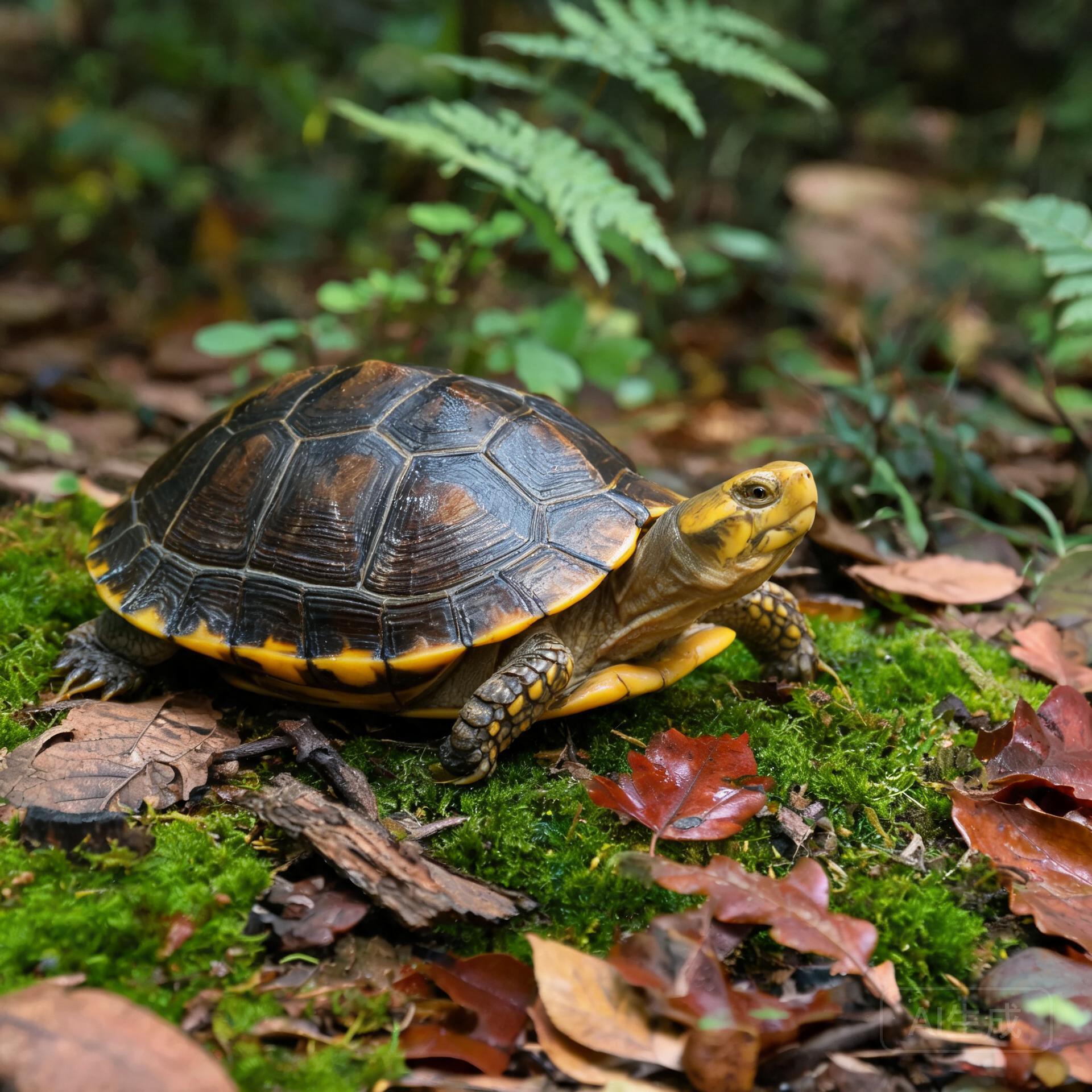
Cuora flavomarginata, also known as the yellow-margined box turtle, Chinese box turtle, or "broken-plate turtle," is a native Chinese semi-aquatic species prized by hobbyists for its distinctive looks and gentle temperament.
Species traits:
- Highly domed carapace with prominent yellow stripes along the margin
- The plastron can close completely, forming a box-like defense
- Highly interactive, intelligent, and trainable
- Adapted to the Chinese climate; relatively easy to keep
Subspecies:
- Mainland type: larger (15-18 cm), lighter carapace with clear markings, priced at 300-800 yuan
- Taiwan type: smaller (12-15 cm), dark reddish-brown carapace, priced at 800-1500 yuan
Lifespan: 30-50 years
Difficulty: requires experience
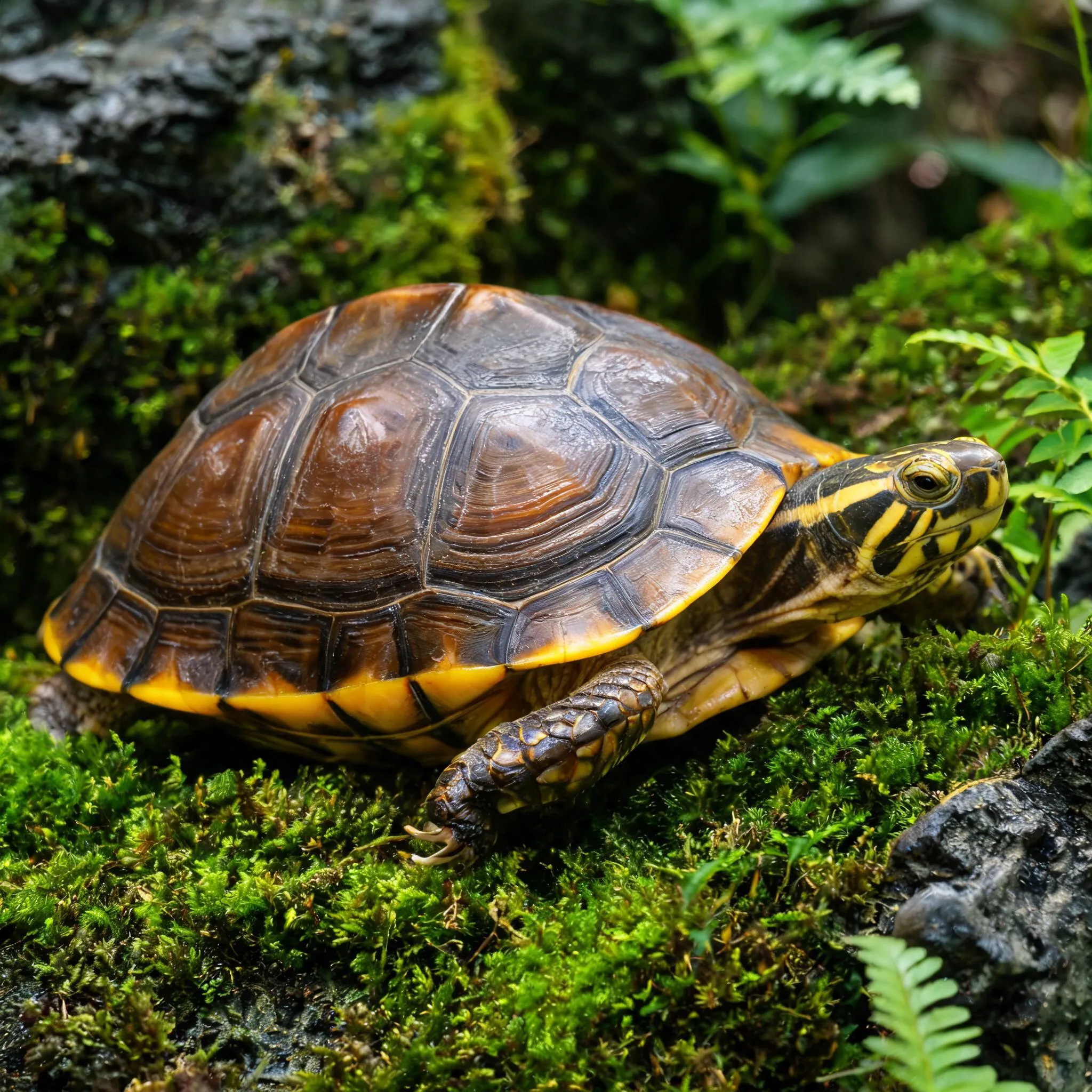
The yellow-margined box turtle is semi-aquatic and needs a half-water, half-land setup, with the land area making up 60-70%.
Choosing the enclosure:
- A planting box 80 cm long and 40 cm wide is recommended
- The rim should be 20-30 cm high to prevent escapes
- A two-tier raised design can be used
Land area setup:
- Substrate: garden soil, red clay, or coconut coir (5-10 cm deep)
- Top it off with akadama for a more attractive look
- Provide a hide or a piece of wood
- Ferns, moss, and other plants can be added
Water area setup:
- Shallow water 2-3 cm deep (just covering the shell)
- The water area makes up 30-40%
- Mainly used for soaking and rehydration
Humidity management:
- Keep humidity at 60-80%
- Mist on a schedule (2-3 times a day)
- Red clay holds humidity well when sprayed
- Avoid using humus soil indoors
Suitable temperatures:
- Ambient temperature: 22-28°C (optimal 24-30°C)
- Basking spot temperature: 32-35°C
- Hibernation temperature: 5-15°C
Summer management:
- Avoid overheating the enclosure
- Place it in a well-ventilated spot or use a fan to cool it down
Winter management:
- Below 10°C it enters hibernation
- Move it to a dark, quiet indoor spot
- A heat lamp or heat mat can be used to maintain a suitable temperature
Lighting needs:
- UVB lamp 8-10 hours a day
- Bask in weaker morning or afternoon sun for 15-30 minutes
- Promotes calcium absorption and metabolism
Notes:
- Before hibernation, confirm the turtle is healthy and heavy enough
- Hatchlings and sick turtles are not recommended for hibernation
The yellow-margined box turtle is omnivorous with a carnivorous lean and accepts a wide range of foods.
Recommended foods:
- Animal-based: earthworms, mealworms, snails, small fish and shrimp, insects
- Plant-based: tomato, banana, pumpkin, vegetables
- Calcium sources: shrimp shells, fish bones, cuttlebone
Feeding frequency:
- Hatchlings: once a day
- Adults: once every 2-3 days
Portion size:
- Feed roughly as much as it can finish within 15-20 minutes
- Avoid overfeeding, which causes indigestion
Feeding tips:
- Place food in a feeding dish and let the turtle eat on its own
- Remove leftover food within 10 minutes after feeding
- Offer plenty of nutrient-rich food to boost immunity
Nutritional Supplement Tips
Regularly offer liver-type food to supply vitamin A, which supports eye health and immunity. Vary the diet to avoid imbalances caused by a monotonous one.
Common Feeding Problems
Refusal to eat is usually caused by unsuitable temperatures or stress. Keeping a suitable temperature and minimizing disturbance can restore appetite. Krill can be used to entice eating.
Water maintenance:
- Change water 2-3 times a week, replacing 1/4-1/5 of the volume each time
- Remove leftover food within 10 minutes after feeding
- Keep the water area clean to prevent water quality from deteriorating
Habitat cleaning:
- Clean the enclosure once a week
- Remove feces and food residue
- Replace the substrate or moss
- Disinfect regularly to prevent bacterial growth
Health checks:
- Observe energy level, appetite, and droppings
- Check that the eyes are clear with no discharge
- Check the plastron and carapace for damage
- Deal with anything abnormal promptly
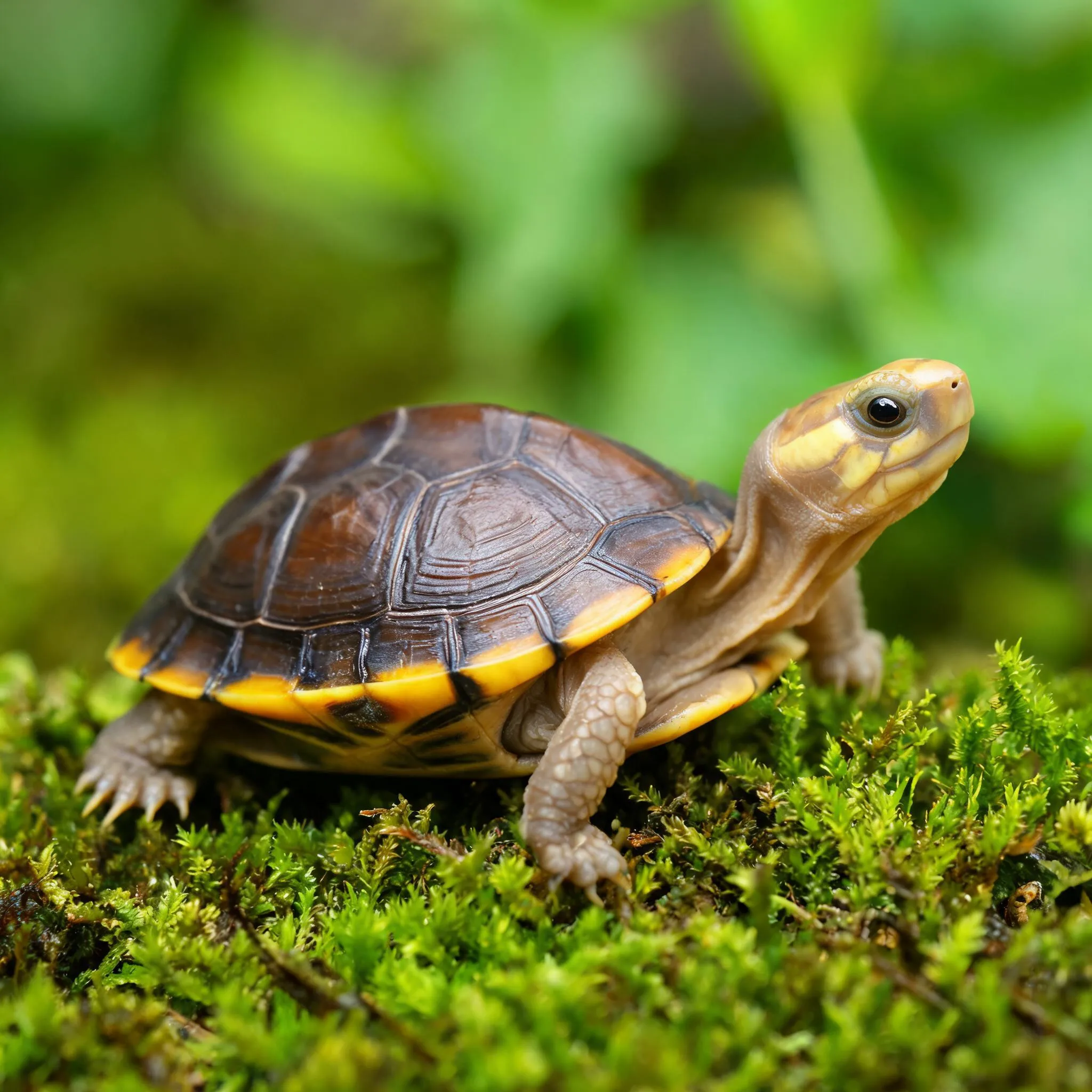
The yellow-margined box turtle is highly interactive and can be trained to become more tame.
Training steps:
Food luring: hand-feed so it becomes familiar with your scent
Regular contact: gently touch it every day to reduce stress responses
Sound training: make a specific sound while feeding to build a conditioned reflex
Following training: hold food in your hand to guide it to move
Training tips:
- Train for 5-10 minutes each time
- Avoid sudden movements that startle it
- The species is intelligent and can build trust within 2-3 weeks
- Patience is key
Dehydration:
- Cause: insufficient humidity, water area too small
- Solution: raise humidity to 70-80% and enlarge the shallow water area
Food refusal:
- Cause: unsuitable temperature, stress
- Solution: keep a suitable temperature (24-28°C) and reduce disturbance
Eye infection:
- Cause: dirty environment, abnormal humidity
- Solution: clean the habitat and adjust humidity
Escapes:
- This box turtle climbs well
- The enclosure rim should be at least 20-30 cm high
- Install a protective screen